If you’re a small business owner, you’ve probably asked yourself at some point:
“Do I really need a website, or can I just run everything on social media?”
It’s a fair question, and with so much conflicting advice online, it’s no wonder people get stuck choosing between the two. On one hand, social media is free and easy to jump into. On the other, websites feel more “official” and give you something you actually own.
So when it comes down to websites vs social media, which one should your business focus on?
Here’s the short answer:
Most small businesses get the best results from using both. A website as your foundation, and social media as your outreach tool.
But that’s not the whole story. Each platform comes with clear advantages, limitations, and cost considerations, and depending on where your business is right now, you might choose to start with one before adding the other.
This guide breaks everything down in plain English, so you can confidently decide what’s right for you and your business.
- Quick Answer: Websites vs Social Media
- Websites: Your Business’s Online Home
- What Websites Are Good For (and Why They Matter)
- Website Downsides
- Social Media: Your Visibility Engine
- What Social Media Is Good For
- Social Media Downsides
- Websites vs Social Media: Do You Need Both?
- Cost Breakdown: Websites vs Social Media
- Ownership: Websites Are Yours. Social Media Isn’t.
- Building Credibility: Trust Matters
- Connecting With Customers (Where Each Platform Wins)
- Learning Curve: Which One’s Easier?
- So… Which Should You Choose First?
- Final Thoughts
- Faqs
Quick Answer: Websites vs Social Media
If you’re short on time, here’s the quick rundown:
Websites are best for:
- Credibility and professionalism
- Showing up on Google searches
- Long-term brand building
- Selling products/services online
- Owning your content and customer journey
Social media is best for:
- Building awareness
- Connecting with customers in real time
- Growing a community
- Creating low-cost content
- Driving traffic to your website
The ideal approach:
A website gives you a stable foundation. Social media brings the people to it.
Websites: Your Business’s Online Home
Let’s address the obvious: if you run a business in 2025 and don’t have a website yet, this is your sign to get one.
A website doesn’t need to be complicated. It can be a one-page brochure site, a service-based website, or a full eCommerce shop. What matters is that it gives your business a home of its own. Something you own, control, and build over time.
According to SEO.ai, Google processes over 8.5 billion searches every single day. Your customers are Googling businesses like yours. If you’re not showing up, your competitors are.
What Websites Are Good For (and Why They Matter)
1. Full Control Over Your Brand
A website is the one place online where you control everything, the design, the colours, the messaging, the layout, the experience. No algorithm decides who sees your content.
This helps you build a consistent, professional identity that reflects who you are.
2. Credibility & Trust
People trust businesses with websites. It signals that you’re established, invested, and planning to stick around. Visitors can read about your team, your services, your mission, and your reviews, all in one place.
Your website is your digital handshake.
3. SEO (Search Engine Optimisation)
Websites allow you to appear in Google searches, which means customers can find you without you having to constantly post on social media.
Blogs, landing pages, service pages, and FAQs all contribute to long-term organic traffic.
4. Sell Online (eCommerce & Bookings)
If you want to sell products, take bookings, or offer digital downloads, your website becomes a powerful revenue tool.
Social media can promote, but your website converts.
5. It’s a Long-Term Asset
This is a big one. You own your website.
It doesn’t disappear because a platform shut down, changed its rules, or banned your account. You’re in control.
Need help building a website?
Check out our web design services
Website Downsides
Websites are powerful, but they’re not perfect:
- They require an upfront investment
- They need ongoing maintenance and updates
- They’re less interactive than social platforms
But once the foundation is built, they become one of the strongest assets a small business can own.
Social Media: Your Visibility Engine
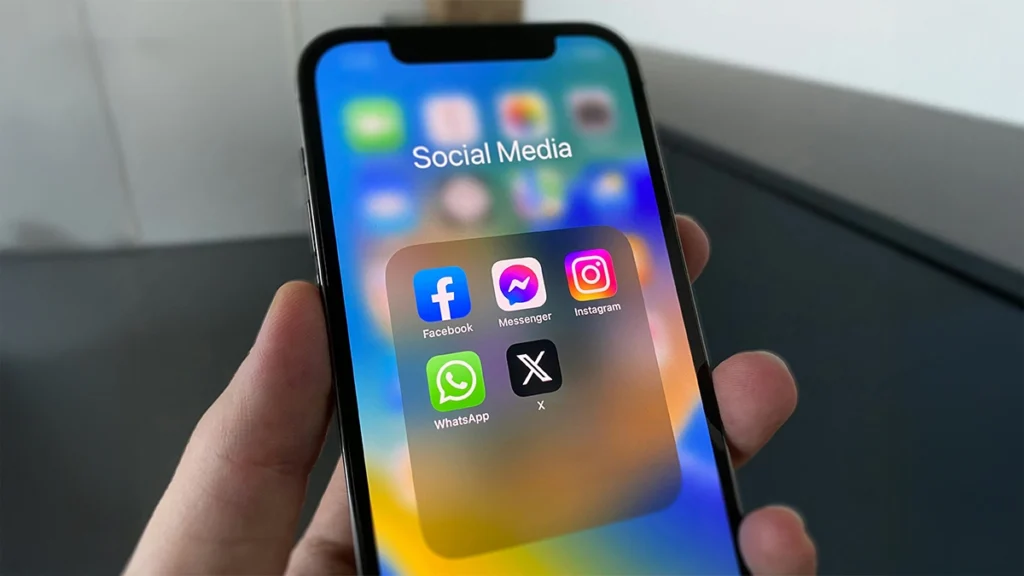
Now let’s look at the other side of the websites vs social media debate.
Social media platforms, Facebook, Instagram, TikTok, LinkedIn, YouTube, give you instant access to audiences without needing a website upfront. With 4.8 billion users worldwide, it’s no surprise social media feels like the easier place to start.
And it is – at least initially.
What Social Media Is Good For
1. Real-Time Interaction
You can talk to customers instantly through comments, messages, and stories. Conversations happen quickly, which helps build relationships and trust.
2. Brand Awareness & Reach
Social media is incredible for exposure. With the right content, you can reach thousands (sometimes millions) of people overnight.
Though going viral is much harder than it sounds, and increasingly competitive.
3. Cost-Effective Marketing
You can run ads from as little as a few pounds a day. Targeting is strong, and you can reach very specific audiences.
4. Community Building
Groups, polls, stories, and live videos help you bring customers together, turning followers into fans.
5. Low Barrier to Entry
It costs nothing to start a page. Perfect for new businesses who want visibility before investing in a website.
Need help with your social media?
Check out our social media services
Social Media Downsides
And now the drawbacks:
- You don’t own your audience:
Your account can be restricted or banned overnight. - Short shelf life:
Posts disappear quickly unless you’re paying to promote them. - Algorithm dependency:
You’re competing with thousands of businesses for attention. - High content demand:
To stay visible, you must consistently create valuable content, which is time-consuming.
Social media is powerful, but it’s a rented space. Any success you build exists on someone else’s platform.
Websites vs Social Media: Do You Need Both?
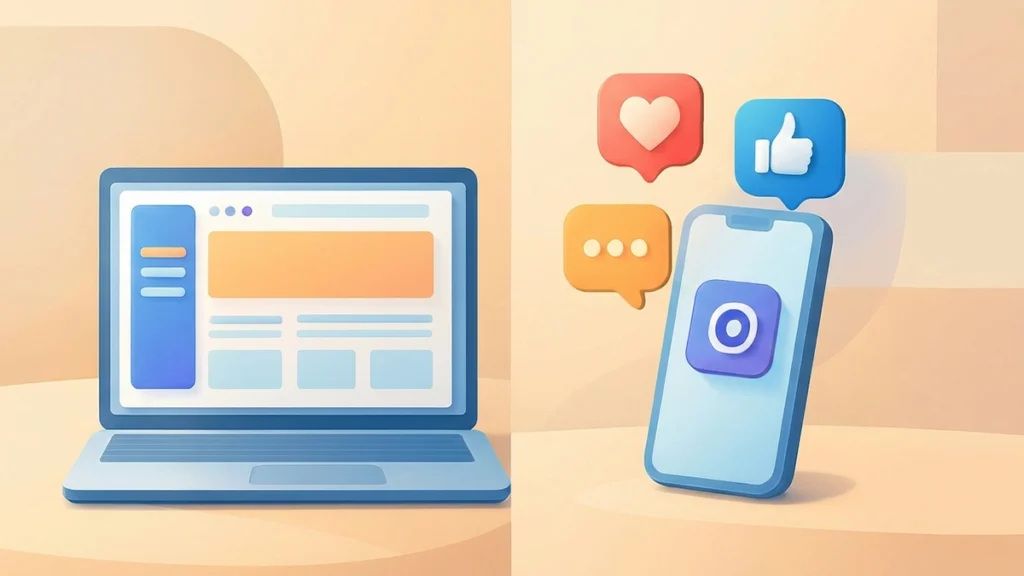
In most cases: yes.
1. They serve different purposes
- Your website is your foundation
- Your social media is the amplifier
One builds trust; the other builds awareness.
2. Multiple touchpoints increase conversions
Some customers will discover you through social media. Others will find you through Google. Some will check your website before buying, even if they found you on Instagram.
The more places you appear, the stronger your brand becomes.
3. Long-term + short-term strategy working together
Social media gives you quick wins.
Websites give you long-term stability.
4. Cost-effective marketing
Use social media ads to drive traffic to your website where the actual conversion happens, whether that’s buying, booking, or joining your email list.
Cost Breakdown: Websites vs Social Media
Website Costs
Typical expenses include:
- Domain: £10–£50 per year
- Hosting: £3–£30 per month
- Professional design: £1,000–£10,000+
- Maintenance: ongoing updates, backups, and security
You pay more upfront, but it’s a long-term investment.
Social Media Costs
Social media is free, but:
- High-quality content creation isn’t
- Advertising costs vary based on your audience
- Management tools like Buffer or Hootsuite typically cost £10–£100 per month
You pay with time, creativity, and consistency.
Ownership: Websites Are Yours. Social Media Isn’t.
This is one of the biggest arguments in the websites vs social media debate.
With a website:
- You own the domain
- You own the hosting
- You own the content
- You control the rules
With social media:
- You are renting space
- You follow platform rules
- Your reach depends on algorithms
- Your account can be limited or removed
Think of social media as marketing your house, but you still need the house.
Building Credibility: Trust Matters
Websites build trust through:
- Professional design
- Clear information
- Testimonials
- Security features
- Brand consistency
Social media builds trust through:
- Real conversations
- Reviews and comments
- Social proof
- Quick responses
Use both and you cover every type of trust signal customers look for.
Connecting With Customers (Where Each Platform Wins)
Websites = Information
Visitors learn who you are, what you do, how much you charge, and how to contact you.
People comment, chat, react, and participate in your content.
Both are needed to build meaningful long-term relationships.
Learning Curve: Which One’s Easier?
Creating a solid digital presence takes time, whichever platform you choose.
Websites require knowledge of:
- Design and layout
- User experience
- SEO
- Basic tech setup
- Ongoing maintenance
Website builders make things easier, but for best results, you still need a strategy.
Social media requires knowledge of:
- Content creation (graphics, photos, video)
- Posting strategy
- Understanding algorithms
- Community management
- Analytics and ads
Comparing the Learning Curve
Websites generally have a steeper learning curve due to the technical aspects, design considerations, SEO, and maintenance requirements. While website builders can simplify the process, creating a custom website often requires more advanced skills.
Social media platforms are designed to be more accessible, with a gentler learning curve. However, mastering social media marketing and community management can be complex and time-consuming, especially as algorithms and trends change.
So… Which Should You Choose First?
Here’s a simple approach:
- If you’re just starting out:
Start with a website + one social media platform you can realistically maintain. - If you already have social media:
Build a simple website as soon as possible. It makes everything else easier. - If you already have a website:
Use social to drive traffic, build awareness, and connect with customers in a more personal way. - If time is your biggest challenge:
Prioritise the platform that gives you the quickest impact right now, then add the other when you’re ready.
Final Thoughts
In the websites vs social media debate, there’s no one-size-fits-all answer. It depends on your goals, your skills, and the time you can commit.
But in today’s digital world, the most successful small businesses use both:
- A website to build credibility, house your brand, and support long-term growth
- Social media to connect, engage, and reach new people
Start simple. Build gradually. Choose platforms you can commit to. And remember, the best online presence is the one you can maintain consistently.