Email marketing doesn’t get much hype anymore. It’s not new, it’s not flashy, and it’s definitely not the thing everyone’s talking about on social media.
However, quietly, in the background, email marketing is still doing a lot of the heavy lifting for UK small businesses.
When it’s done properly, email remains one of the most reliable and cost-effective ways to stay in touch with customers, drive repeat business, and build long-term trust. When it’s done badly, it’s ignored, unsubscribed from, or marked as spam.
In this guide, we’re breaking down the top email marketing strategies for UK small businesses in 2026, without jargon, hype, or unrealistic expectations.
- Why Email Marketing Strategies Still Matter for UK Small Businesses in 2026
- How Email Marketing Has Changed (And Why Old Tactics Don’t Work)
- Build an Email List That Actually Wants to Hear From You
- Write Emails Like a Human, Not a Brand
- Mobile Optimisation Is Non-Negotiable
- Use Automation to Save Time (Not Sound Robotic)
- Lead With Value, Not the Sale
- Track the Metrics That Actually Matter
- Stay Compliant (And Build Trust While You’re at It)
- Make Email Part of a Bigger Picture
- Common Email Marketing Mistakes We See All the Time
- What a Sustainable Email Strategy Looks Like in 2026
- Final Thoughts
Why Email Marketing Strategies Still Matter for UK Small Businesses in 2026
With social platforms constantly changing their algorithms, email has one big advantage: you own it.
Your email list isn’t affected by reach drops, pay-to-play ads, or sudden platform changes. If someone has subscribed, you can reach them directly, which is something many businesses underestimate until they lose it.
We also consistently see email outperform other channels in return on investment. That’s especially important for small businesses where every marketing decision needs to justify its cost.
That said, email marketing in 2026 isn’t about sending more emails. It’s about sending better ones.
How Email Marketing Has Changed (And Why Old Tactics Don’t Work)
If your idea of email marketing still involves sending the same newsletter to everyone once a month, results will likely be disappointing.
Today, email marketing is much more focused on:
- Relevance over volume
- Permission over pressure
- Clarity over cleverness
People are far more selective about what they read. If your email doesn’t feel useful or relevant within a few seconds, it’s gone.
That’s not a bad thing – it just means businesses need to be a bit more intentional.
Build an Email List That Actually Wants to Hear From You
One of the most common mistakes we see is businesses focusing on growing their list as quickly as possible without thinking about who is actually on it.
In reality, a smaller list of engaged subscribers will always outperform a big list of people who don’t care.
Make Consent Clear (And Worthwhile)
Yes, GDPR matters. However, good email marketing goes beyond ticking a legal box.
People should know:
- What they’re signing up for
- How often you’ll email them
- What they’ll actually get in return
If that’s vague or hidden, engagement will suffer later.
Give People a Real Reason to Subscribe
Most people won’t join a mailing list “just in case”. You need to give them a reason.
That might be:
- Practical tips they can actually use
- Early access to something useful
- A helpful guide or checklist
- Insights specific to their industry
The more specific the value, the better the quality of subscribers you’ll attract.
Segment Early (Even If Your List Is Small)
Segmentation sounds technical, but it doesn’t need to be.
At its simplest, segmentation just means not sending the same message to everyone, and even small lists benefit from this.
Simple Segments That Work Well
You could start by separating:
- Customers vs non-customers
- Enquiries vs subscribers
- Product or service interest
- Location (especially useful for UK-based services)
This alone can dramatically improve engagement, because emails feel more relevant by default.
Write Emails Like a Human, Not a Brand
People don’t open emails because they’re perfectly written. They open them because they sound useful and genuine.
Subject Lines: Clear Beats Clever
Clever subject lines might look fun, but clarity usually wins, especially on mobile.
Good subject lines:
- Say what the email is about
- Avoid clickbait or hype
- Sound natural
If someone opens your email expecting one thing and gets another, trust drops quickly.
Here’s a simple comparison:
❌ Bad subject line
“You won’t believe what we’ve been working on…”
This is vague, says nothing useful, and feels a bit click-baity. The reader has no idea what’s inside or why they should care.
✅ Good subject line
“5 email marketing tips UK small businesses can use this month”
This works because it’s clear, specific, and sets expectations straight away. The reader knows exactly what they’ll get before opening the email.
As a general rule, if your subject line clearly explains the value of the email, you’re already ahead of most inbox competition.
One Email, One Point
Trying to cover everything in one email usually backfires.
Instead:
- Focus on one topic
- Keep paragraphs short
- Use a single, clear call to action
This makes emails easier to read and far more effective.
Mobile Optimisation Is Non-Negotiable
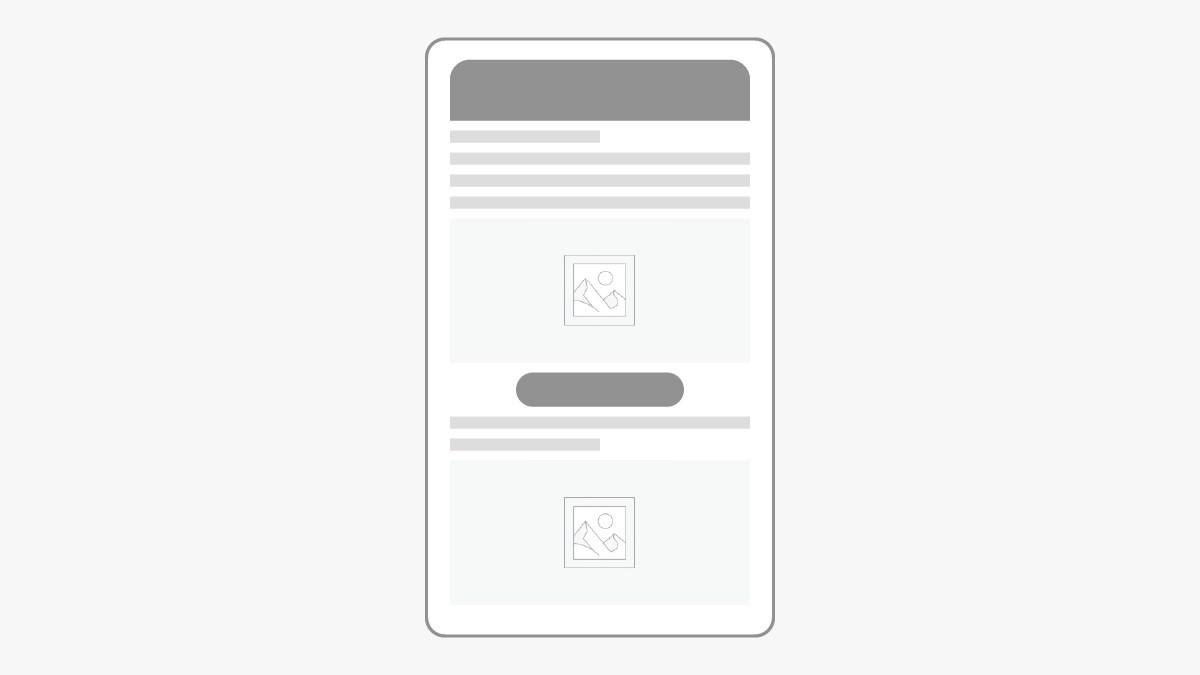
Most people will open your emails on their phone. If your email is hard to read or awkward to tap, it will be deleted, even if the content is good.
Best practice includes:
- Single-column layouts
- Readable font sizes
- Plenty of spacing
- Buttons that are easy to tap
Always preview your emails on mobile before sending. It’s a simple step that avoids a lot of frustration.
Use Automation to Save Time (Not Sound Robotic)
Automation often gets a bad reputation, but that’s usually because it’s done badly. Good automation doesn’t feel automated. It just feels timely.
Automations Worth Setting Up
For many small businesses, automation is one of the most practical email marketing strategies available, especially when time and resources are limited.
- Welcome emails for new subscribers
- Follow-ups after downloads or enquiries
- Abandoned cart emails
- Re-engagement emails for inactive subscribers
These emails often perform better than newsletters because they arrive at the right moment.
Automation doesn’t replace personality – it protects your time. It takes care of the repetitive stuff in the background, so you’re not constantly stuck sending the same emails over and over. Done properly, it still sounds like you, just without the manual effort.
Lead With Value, Not the Sale
One of the quickest ways to lose subscribers is to treat every email like a sales pitch. That doesn’t mean you can’t sell. It just means selling should feel natural.
A simple rule that works is that if every email asks for something, people stop listening.
Instead:
- Share genuinely useful content
- Explain why something matters
- Promote your services when it makes sense
When people trust your emails, they’re far more likely to act when you do make an offer.
Track the Metrics That Actually Matter
Data is helpful, but only if you look at the right things. For most small businesses, these are the ones worth watching:
- Open rates (are subject lines working?)
- Click-through rates (is the content useful?)
- Unsubscribes (are expectations misaligned?)
- Conversions (does this support real goals?)
Chasing vanity metrics rarely leads to better results.
Stay Compliant (And Build Trust While You’re at It)
Email compliance in the UK isn’t optional, but it doesn’t need to feel intimidating.
Make sure:
- People can unsubscribe easily
- You only email people who opted in
- Your business details are clear
Transparent practices don’t just protect you legally, they also build credibility.
Make Email Part of a Bigger Picture
Email works best when it supports your wider marketing, not when it’s isolated.
You can use email to:
- Share new blog posts
- Support social campaigns
- Promote videos or guides
- Nurture enquiries over time
When everything works together, your marketing feels more consistent and intentional.
Common Email Marketing Mistakes We See All the Time
Even well-meaning businesses trip up on the basics.
The most common issues include:
- Sending too often without clear value
- Ignoring mobile layouts
- Using generic templates with no personality
- Never cleaning inactive subscribers
Fixing these alone can make a noticeable difference.
What a Sustainable Email Strategy Looks Like in 2026
For most UK small businesses, email marketing doesn’t need to be complex.
A realistic approach might be:
- One or two emails per month
- Clear goals for each send
- A handful of useful automations
- Regular reviews of what’s working
Consistency beats intensity every time.
Final Thoughts
The best email marketing strategies for UK small businesses in 2026 are simple, intentional, and focused on long-term relationships rather than quick wins.
You don’t need complicated funnels or daily emails. You need clarity, relevance, and a willingness to focus on what actually helps your audience.
If email currently feels overwhelming or underwhelming, that’s usually a sign it needs simplifying, not scaling.
Done properly, email marketing doesn’t feel like marketing at all. It just feels like staying in touch.